These things are true.
The world is dark.
And we are alive.
I am very happy to report that last night I had a successful first time running Ten Candles, a tragic horror one-shot TTRPG written by Stephen Dewey and published by Cavalry Games. In this game, players collaboratively tell the tale of a group of survivors, attempting to do one last act of defiance against the enemy (Them) that will slowly and surely consume them in the darkness. It is very much intended to be a game played in person, with much of the game’s mechanics being linked to the visual display of the game, as ten candles are lit in a circle and each player literally burns their trait cards one by one as they are used up.
I don’t currently have ten candles, a fireproof bowl, or a group of people with time to run this game. I also didn’t want to embarrass myself in front of people by discovering halfway through a game that I can’t do horror very well. With that in mind, I had to improvise, running the game online through Discord and Roll20.
Below isn’t necessarily a full review of the game itself, but instead a reflection on how it went running the game on a digital platform, and what lessons from this session could be brought into future games both on and off the computer.
The Setup
I don’t feel I can go much further without explaining how I set up the game, and how I feel that worked.
I created the ten candles in Roll20, using a black screen and ten png candles to use as trackers. In the middle, I wrote the game’s mantra: these things are true, the world is dark, and we are alive. This was definitely nowhere near as atmospheric as it would be in real life, but I think it worked well because it was plain and simple: trying to overcomplicate it would likely have detracted from the overall experience. Roll20’s UI did get in the way somewhat - it’s white and cannot be entirely hidden. We were able to get around it mostly by using the 3D dice and a dice macro to roll, giving the rolling experience a more tangible feel - players could see their dice roll across the screen, and I could use the macro to quickly see how many successes and failures they rolled.
Two Discord bots were also used for the game: one to provide atmospheric ambience (which the group very much enjoyed: track 1, track 2, track 3), and another to act as the recorder.
At the start of the game, the group is prompted to leave a final message for anyone that may search for them in the future. It’s their last testament to the world, and potentially the last thing they will ever leave behind. Craig was a fantastic bot to use for this, provided you remember to mute the bot before it joins the server (it gives a message to say when it is recording, which would likely break immersion). I won’t spoil how it comes into play in the game itself, but I will say that it worked wonderfully.
Collaboration and Improvisation
Much of Ten Candles relies on the group working together to tell a good story, and on both players and the GM improvising how events occur. The GM guide explicitly states that GMs should not do much prep work, and I followed this… somewhat. Online tips suggested having notes on the locations of interest, Truths to throw in, and sensory information that you want to convey to players. Beyond that, I had nothing.
I think this is one of the strongest points of the game, provided that you have a group that is all in on the idea. I made the mistake of not blatantly saying that this was a collaborative game - arguably all games should be collaborative to some extent - but in particular I didn’t get across that character creation was a group effort, and that if a player succeeds on a roll, they dictate what happens next. Once it started it worked out fantastic, especially with players that weren’t afraid to give their characters infested wounds and broken legs, or help build a sense of unease in the world. But it’s definitely something that I need to be more clear about in future, to make sure that the group is fully on board and that players are the sort to enjoy telling the story with the GM.
An area where this failed for this session was in the Truths: statements created at the start of each scene that are considered true for the remainder of the session. If you want to see the Truths of our game, they can be found here. With so many truths and them not being immediately available for players to refer to, many ended up being forgotten or ignored. In future games, I think it would be good to nominate a player to write down the Truths, or to have the list be available to players to look at (or at least, the Truths the GM is happy with them remembering).
Why Can't We Die Already?
In Ten Candles, the GM can only kill off characters in the final scene; players can alternatively choose for their characters to die in sacrifices to gain control of the narrative when they fail a dire conflict. Both times when the latter option was provided, the players took them, narrating the tragedy of fighting a formless enemy in a pitch black collapsing lumber mill, and the horror of holding a door shut for dear life as insects crawl through the gaps and devour the would-be hero.
I understand why this is the case: having players die too soon could lead to them feeling left out, whilst giving players the choice to kill off their character gives them control of the situation and a feeling that their death is something they can portray in a way that interests them. However, my group did bring up after the game that it felt strange that they couldn’t be killed sooner. There were times when they failed - more specifically, rolled no 6s and no 1s - and felt that it would be appropriate for their character to die due to that failure instead of just not succeeding and the scene ending.
This coincides with another issue that was present:
The Dice Were Apathetic
For interesting things to happen in the game (either narrative success or the opportunity to burn a trait and reroll), a player must roll a 6 or a 1 on any of the dice in their dice pool. Our dice didn’t seem to want to roll either for the vast majority of the game.
What this led to was 2-3 players that never got to use any of their traits, and who never succeeded or failed in such a drastic way that it could be interesting or used to build dread and tension. There was a sense of disappointment at the end of the game when people said that they had wanted to reach their Moments (events that could bring them hope) or Brinks (what they become when all hope is lost), but couldn’t because the opportunity never presented itself.
This led to the suggestion that it is possible that the range of values on a d6 may be too many for this game. One option that was suggested was switching to a d4. Below is a table of how this would affect the probabilities of a ‘good’ roll (a 1 or a 6 on any dice in the dice pool) and a ‘bad’ roll (rolling no 1s or 6s on all of the dice in the dice pool):
| # dice in dice pool |
Good Roll | Bad Roll | ||
|---|---|---|---|---|
| d6 | d4 | d6 | d4 | |
10
|
83% | 94% | 1.7% | 0.09% |
6
|
66% | 82% | 8% | 1.5% |
3
|
42% | 57% | 30% | 12.5% |
1
|
16% | 25% | 66% | 50% |
Whilst I am personally unsure to what extent this would truly make things better or worse, it’s definitely something I am willing to try out when I next run the game.
Final Thoughts
Ten Candles is definitely a game that I wish to return to in the future. It isn’t one that’s for everyone, but it definitely worked for me as a game that can be prepared quickly, run in an afternoon or evening without going overtime, and with mechanics that aid the GM in building and diffusing tension and dread throughout. I’ll be running it in person in late October, and until then I’ll also be looking into other horror TTRPGs that may translate well online to see if horror is a genre I can pursue in other ways.
As always, I’m especially grateful to everyone who participated in the game and gave me suggestions for inspiration, horror-game reading, and example sessions.
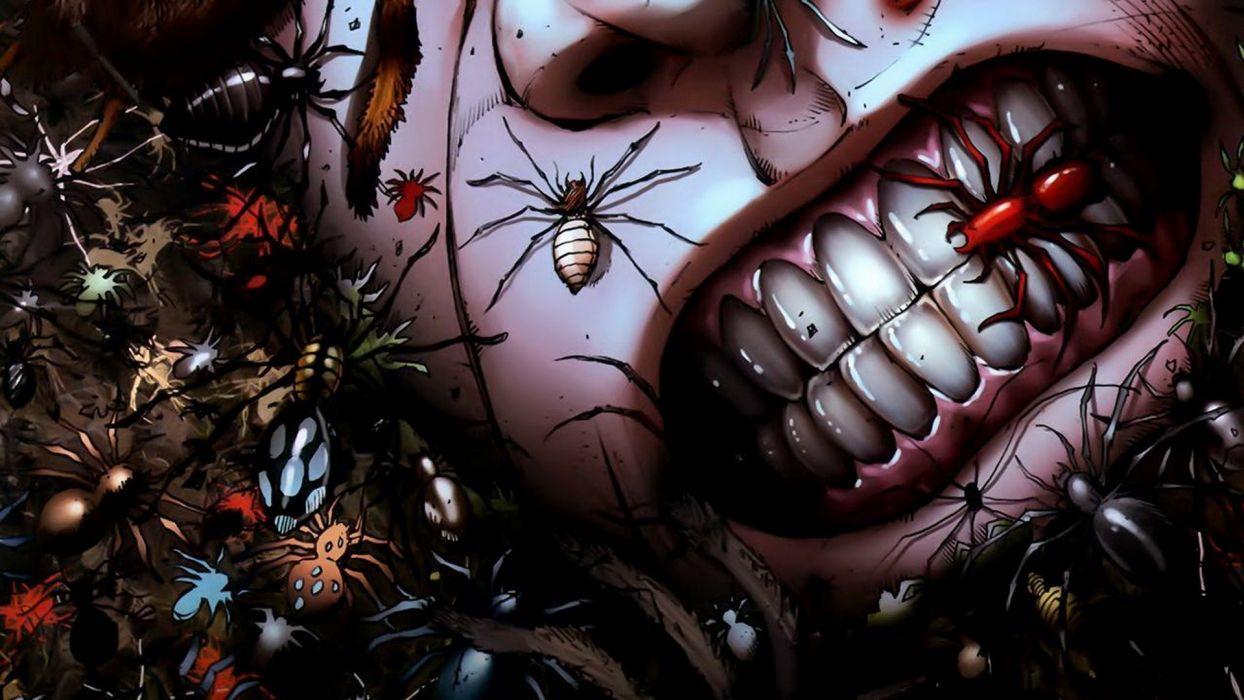 |
| Basically what happened to the vast majority of the players. |

Ten Candles was such an amazing game! If you liked it online, believe me that you would love it IRL. The whole thing with the candles and people speaking in unison is crazy thematic and adds so much to the atmosphere.
ReplyDeleteI'm intending to play IRL next month, and am planning another online session next week to practice the system again. I'm really looking forward to playing it in person!
Delete